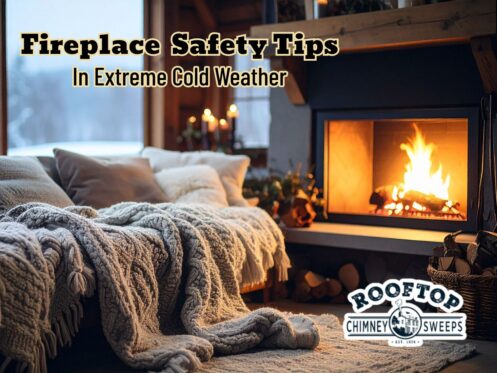
When temperatures drop into the deep freeze, fireplaces quickly become one of the most used features in the home. They provide warmth, comfort, and a sense of security during winter cold snaps. But extreme cold also puts added strain on chimneys and fireplaces, increasing the risk of smoke problems, poor draft, and safety hazards. Understanding how to use a fireplace during extreme cold safely helps protect your home, your family, and your peace of mind throughout the winter season.
Homeowners across Northern and Central Virginia often rely more heavily on their fireplaces during prolonged freezes as a source of home heating. Here, our experts explain what changes when you use your fireplace during sub-freezing temperatures.
Why Extreme Cold Changes How Fireplaces Behave
Extreme cold affects the way air moves through your home and chimney. When outdoor temperatures plunge, the difference between indoor and outdoor air pressure becomes more pronounced. This can interfere with proper chimney draft, which is essential for pulling smoke and exhaust safely out of your home.
Cold air is heavier and can settle inside the flue, making it harder for smoke to rise. At the same time, tightly sealed homes may experience negative air pressure, where indoor air is pulled downward instead of up and out. These conditions increase the likelihood of your fireplace causing smoke in the house—a dangerous situation, especially during long periods of freezing weather.
Are Wood Burning Fireplaces Safe During Extreme Cold?
Many homeowners ask, Are wood-burning fireplaces safe when temperatures drop well below freezing? The answer depends on the condition of the fireplace and how you’re using it.
Wood-burning fireplaces are particularly sensitive to draft issues caused by extreme cold. Creosote buildup, partially blocked flues, and cold air plugs can all prevent smoke from venting properly. Burning damp or unseasoned firewood can make these problems worse by producing excess smoke and residue.
Before relying on a wood-burning fireplace during freezing temperatures, scheduling a professional chimney inspection is essential. An inspection helps identify creosote buildup, structural issues, or airflow problems that could turn dangerous when you use your fireplace more frequently.
Gas Fireplace Safety During Freezing Temperatures
Gas fireplaces are often viewed as a safer alternative, but gas fireplace safety is still critical during extreme cold. Venting systems can become blocked by snow, ice, or debris, preventing exhaust gases from exiting properly.
Cold weather can also affect ignition components and pilot lights, especially if the system has not been used regularly. A malfunctioning gas fireplace increases the risk of carbon monoxide entering the home, which is why any unusual odors, performance issues, or shutdowns should be addressed immediately.
Regular professional evaluation ensures your gas fireplace operates efficiently and safely when you need it most.
Safety Tips for Fireplaces During Winter Cold Snaps
Using a fireplace responsibly during extreme cold reduces risk and improves performance. The following winter fireplace safety tips apply to both wood-burning and gas systems:
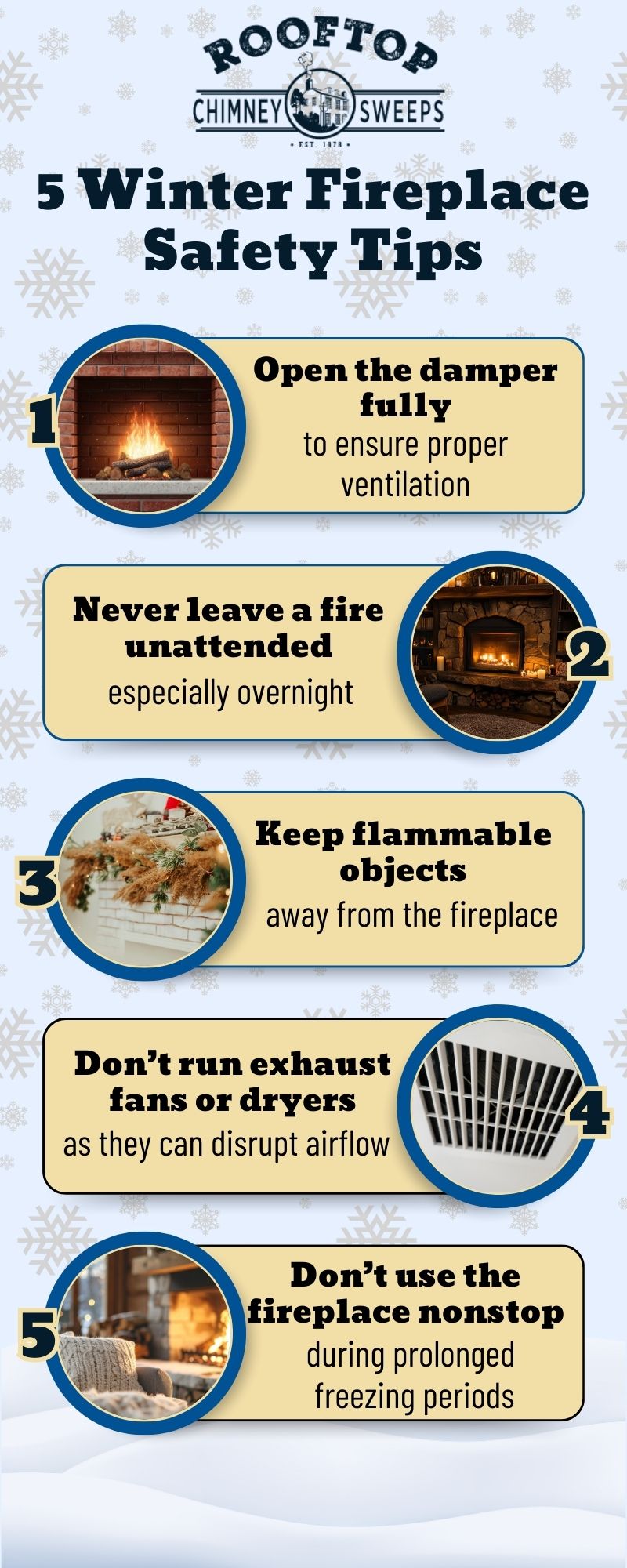
- Always open the damper fully before starting a fire to ensure proper ventilation.
- Never leave a fire unattended, especially during overnight burns.
- Keep furniture, decorations, firewood, and any other flammable objects well away from the hearth.
- Avoid running exhaust fans or dryers while the fireplace is in use, as they can disrupt airflow.
- Limit nonstop use during prolonged freezes to reduce stress on the chimney system.
Following these safety tips for fireplaces helps reduce fire hazards, smoke issues, overheating, and unexpected damage.
Why Fireplace Smoke Inside Your Home Is a Serious Warning Sign
Seeing or smelling smoke inside your home is never normal, especially during cold weather. When fireplace smoke enters the living space, it often signals draft failure, blockage, or structural damage within the chimney.
Fireplace smoke in your house is a dangerous scenario that can expose occupants to harmful particles and gases, including carbon monoxide. If smoke backs up into your home, the fireplace should not be used again until the issue is diagnosed. Professional fireplace repair can address the root cause and restore safe operation before the problem escalates.
Using a Fireplace in Freezing Temperatures Without Overworking Your System
Using a fireplace in freezing temperatures may seem like a practical way to supplement heat, but overuse can accelerate wear and expose existing weaknesses. Extreme cold magnifies small issues, turning hairline cracks, liner deterioration, or buildup into serious hazards.
Annual maintenance plays a critical role in winter safety. Scheduling an annual chimney cleaning removes creosote and debris that restrict airflow and increase fire risk. Clean, well-maintained chimneys perform more reliably and safely during periods of heavy use.
Fireplace Safety for Homes in Northern and Central Virginia
Homes in Northern and Central Virginia experience a wide range of winter conditions, from icy wind chills to extended cold snaps. Older housing stock and historic chimneys are common in areas like Arlington, Falls Church, and Richmond, making professional care especially important.
Fireplaces in these communities often have unique structural and airflow characteristics that require expert evaluation. Working with an experienced chimney company ensures your system is prepared for local weather challenges and used safely all winter long. Contact our professional chimney sweeps today to schedule service for your fireplace.
Frequently Asked Questions About Winter Fireplace Safety
Is it safe to use a fireplace during extreme cold?
Yes, it can be safe to use a fireplace during extreme cold, but only if the system is properly inspected, maintained, and operated correctly. Draft problems and blockages are more common during freezing weather, making professional evaluation essential. Be sure to have another way to heat your home as a backup.
Why does my fireplace smoke more when it’s freezing outside?
Cold air can interfere with chimney draft, especially if the flue is partially blocked or the home has negative air pressure. This causes smoke to struggle to rise and may force it back into the house.
Can extreme cold damage my chimney or fireplace?
Yes, extreme cold can worsen existing cracks, liner damage, and masonry issues. Freeze-thaw cycles place added stress on chimney materials, which is why having your chimney inspected annually and receiving maintenance are so important.
Are gas fireplaces safer than wood-burning fireplaces in winter?
Gas fireplaces generally produce less soot and are easier to control, but they still require proper venting and maintenance. Both systems can be safe when professionally maintained and used correctly.