When winter arrives, many homeowners across Alexandria and Richmond look to their fireplace for warmth as well as comfort. But a common question comes up every year: Does a fireplace heat a house, or is it really just there for ambiance? The answer depends on the type of fireplace you have, how it’s designed, and how efficiently it operates.
Understanding what a fireplace can and cannot do helps you set realistic expectations, avoid heat loss, and make smarter decisions about comfort and safety during cold weather.
How Fireplaces Produce Heat and Where It Goes
Fireplaces generate heat in different ways, but not all of that warmth stays inside your home. Fireplace heat output typically comes from a combination of radiant heat, which warms nearby objects and people, and convective heat, which warms the surrounding air. In many traditional fireplaces, much of that heat never makes it into the living space.
One of the biggest factors is chimney draft. A properly functioning draft pulls smoke and exhaust safely up and out of the home, but it can also carry warm air with it. When a fireplace isn’t designed to retain heat, this airflow leads to significant heat loss through the chimney, especially during prolonged use in cold winters.
Does a Fireplace Heat a House or Just One Room?
For most homes, a fireplace heats a room, not the entire house. While it can make a living room or family space feel warmer, fireplaces are rarely designed to distribute heat evenly throughout a home.
That’s why fireplaces are best thought of as a supplemental heat source. They can reduce reliance on central heating in specific areas, but they are not a replacement for a full heating system. Home layout, insulation, and airflow all play a role in how effective that supplemental heat produced by the fireplace feels.
Fireplace Heating Efficiency by Fireplace Type
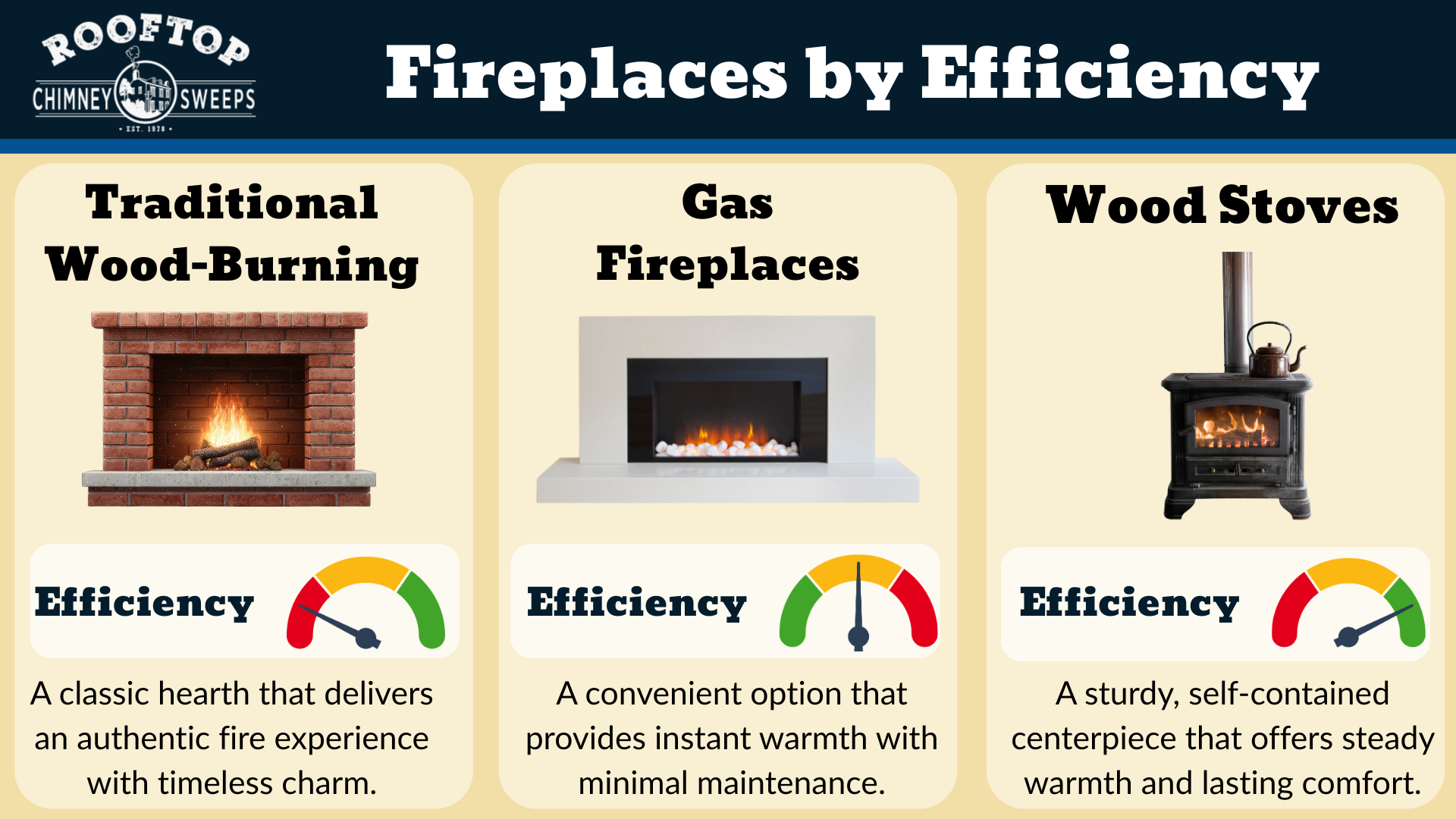
Fireplace heating efficiency varies widely depending on the type of system you have. If the amount of heat output from your fireplace is important to you, consider the efficiency of each system if you’re planning a fireplace installation.
Traditional Wood-Burning Fireplaces
Open, wood-burning fireplaces are often the least efficient option. While they provide strong visual appeal and immediate warmth, much of their heat escapes through the flue. In some cases, these fireplaces can actually pull warm air out of the home when not in use, reducing overall comfort.
Gas Fireplaces
Many homeowners wonder if gas fireplaces are more efficient for heating. Compared to traditional wood-burning fireplaces, gas fireplace inserts offer better energy efficiency. Sealed combustion systems, controlled flames, and consistent output allow a gas fireplace to deliver more usable heat with less loss. A properly installed and maintained gas fireplace can provide reliable supplemental warmth without the mess of wood.
Wood Stoves
Wood stoves are designed specifically for heating, not just ambiance. They offer higher fireplace heat output and better heat retention than open fireplaces. Enclosed fireboxes and controlled airflow allow wood stoves to warm a space more effectively and for longer periods. For homeowners focused on efficiency, choosing to switch to a wood-burning stove can significantly improve heating performance.
Why Some Fireplaces Actually Make Rooms Feel Colder
It may seem counterintuitive, but some fireplaces can make rooms feel colder. When a chimney allows warm air to escape, cold outdoor air is drawn into the home to replace it. This creates drafts and uneven temperatures, especially in tightly sealed homes.
Heat loss through the chimney is most noticeable when a fireplace is unused or when dampers do not seal properly. Over time, this constant air exchange can reduce overall heating efficiency and increase energy bills.
Can Fireplace Condition or Design Improve Heating Performance?
The condition of your fireplace plays a major role in how well it performs. Cracked masonry, damaged liners, or aging components allow heat to escape and reduce efficiency. In some cases, restoring or upgrading the structure can make a noticeable difference.
A professional fireplace rebuild can improve heat retention, airflow control, and overall safety. Rebuilding also allows homeowners to address hidden issues that may be contributing to poor performance or discomfort.
Not Sure If Your Fireplace Is Helping or Hurting Your Home’s Comfort?
If you’re unsure whether your fireplace is adding warmth or quietly working against your heating system, professional guidance can help. At Rooftop Chimney Sweeps, the goal is not to sell unnecessary upgrades, but to help homeowners in Fairfax, Chesterfield, and Henrico counties understand how their fireplace fits into their comfort goals. Whether that means improving efficiency, correcting heat loss, or planning a new fireplace installation, expert evaluation provides clarity and confidence.
Contact us today to get personalized, expert insight into how your fireplace is performing and what options truly make sense for your home.
Frequently Asked Questions About Fireplace Heating Efficiency
Does a fireplace heat a house effectively?
In most cases, no. Fireplaces typically heat a single room and function best as a supplemental heat source rather than a primary heating system.
Are gas fireplaces efficient for heating compared to wood?
Gas fireplaces are generally more efficient than traditional open wood-burning fireplaces. They provide consistent heat with less loss, though efficiency varies by model and installation quality.
Why does my fireplace seem to pull heat out of the room?
If it seems like your fireplace is pulling heat out of the room, it’s usually due to chimney draft and heat loss through the flue. Warm air exits the home while cold air is drawn inside to replace it.
Can a fireplace replace my main heating system?
No. Fireplaces are designed to supplement central heating, not replace it. Relying on a fireplace alone can lead to uneven temperatures and increased heat loss.